
How We Beat Transit Mold and Customs Across the Equator
CUSTOMER STORY / SOUTH AMERICA
How We Beat Transit Mold and Customs Across the Equator
A 45-to-50-day voyage across the equator used to deliver wet, moldy sticks, failed gunpowder adhesion and customs seizures. Here is how we turned it around without paying a premium for vacuum packing.
0%
Mold and misfire rate
100%
Customs pass rate
98.5%
Production yield, up from 82%
12%
Maximum moisture content
Our situation
We are one of the three largest fireworks manufacturers in South America, supplying Brazil, Colombia and Peru. When festival demand around events like Festa Junina pushed us to upgrade to semi-automated Roman candle rolling machines and sparkler coating lines, we suddenly needed millions of dead-straight, uniform bamboo support sticks every year. That is when the real trouble with our old supply chain began.
Three problems that were costing us
Mold after the equator crossing
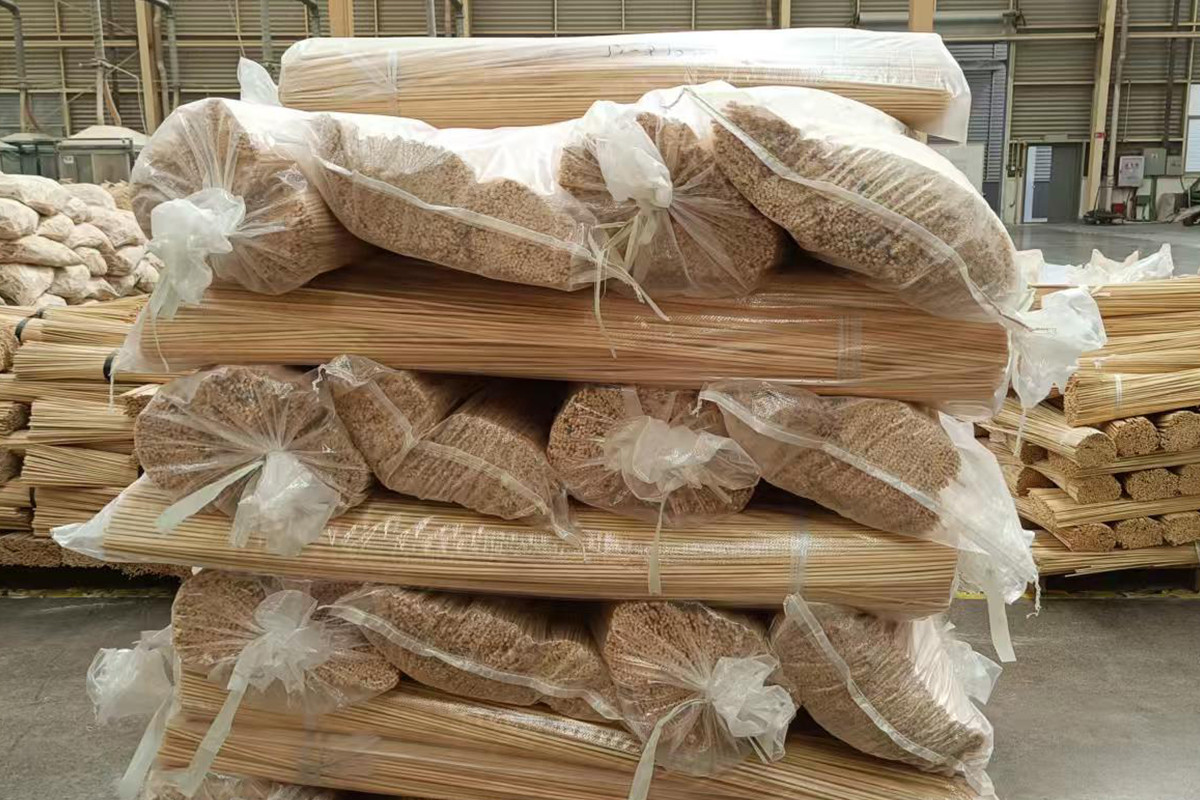
The voyage from China takes 45 to 50 days. Crossing the equator brings radical temperature shifts and heavy container rain. Sticks from our previous supplier arrived in standard woven bags, soaked and heavily molded. Gunpowder would not bond, and our misfire rate climbed.
Customs seizures
South American authorities such as Brazil's MAPA and Colombia's ICA enforce strict phytosanitary rules on plant imports. An unverified supplier once left microscopic insect eggs in a shipment, and an entire container was seized and destroyed.
Jams on the production line
Tapered or warped long sticks, especially the 1.2 m variant, jammed and snapped in our semi-automated machines. The result was loose chemical wrapping and hazardous tube explosions during public displays.
What changed
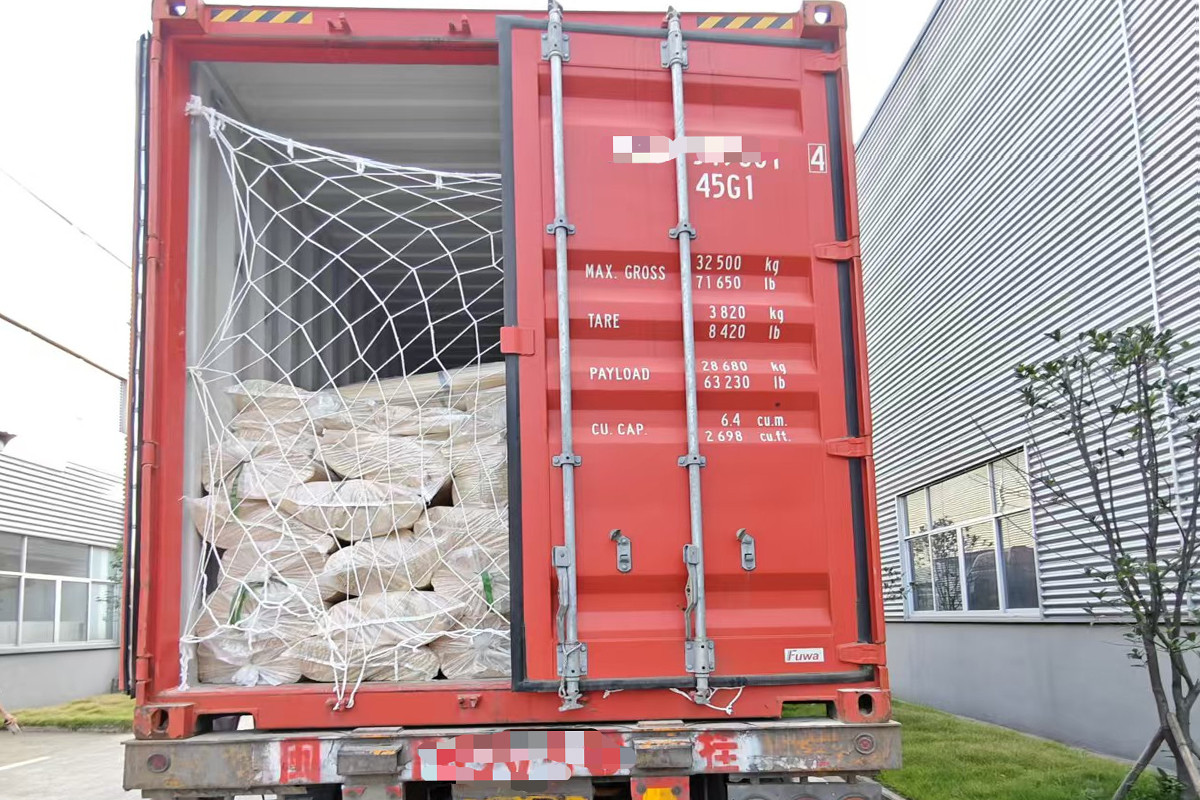
We insisted on keeping economical woven bags to protect container volume and ocean freight cost. QL Bamboo did not argue the point. Instead, they re-engineered the bamboo itself so the packaging could stay cheap without the cargo arriving damaged.
Dried to the export safety threshold
Specialized kilns hold moisture under 12 percent, the recognized safety threshold for exported timber and bamboo. They also advised us on placing heavy-duty industrial desiccants inside the container for the long crossing.
Deep degreasing and sugar extraction
High-temperature, high-pressure steam boiling extracts the natural sugars, fats and starches from the bamboo, destroying the biological ecosystem that mold and insect eggs need to survive.
Rigid bundling inside the bag
Tight dimensional checks keep the straight diameter highly uniform. Before bagging, the long sticks are strapped into fixed-quantity bundles that form a load-bearing column inside the woven bag and resist compression in transit.
Paperwork that actually clears
Every shipment comes with genuine, verifiable phytosanitary certificates and fumigation certificates. That documentation is the reason our containers now move through major South American ports without being held.
The specification matrix we order
| Diameter | Length | Fireworks application | Packing |
|---|---|---|---|
| 5.0 mm | 450 mm | Traditional sparklers, low-smoke handheld cold fireworks | Moisture-proof woven bag |
| 5.0 mm | 600 mm | Extended handheld celebration fireworks, camping sparklers | Moisture-proof woven bag |
| 5.0 mm | 900 mm | Medium Roman candles, magic shot support rods | Moisture-proof woven bag |
| 5.0 mm | 1200 mm | Large display Roman candles, rocket guide sticks | Rigid bundles plus woven bag |
What we got
No mold, no misfires
Dozens of containers shipped in ordinary woven bags have arrived intact over the years. The sticks come out bright, bone dry and naturally fragrant.
Green channel clearance
Backed by complete compliance documents, our shipments consistently clear major ports quickly, with demurrage charges reduced to zero.
Yield up to 98.5 percent
The straight, consistent sticks run smoothly on our semi-automated lines, lifting manufacturing yield from 82 percent to 98.5 percent and ending tube-explosion complaints.

Are you looking for a reliable disposable bamboo product manufacturer?
We can quickly provide customers with market analysis, technical support and customized services.