China Cancels Bamboo Export Tax Rebates in April 2027
China will cancel export VAT rebates on a defined list of bamboo products from 1 April 2027, under Announcement No. 29 of 2026 issued by the Ministry of Finance and the State Taxation Administration on 12 October 2026. The announcement covers selected bamboo goods only — it does not end rebates for the whole bamboo industry, and it does not set a fixed price increase. What it does require is that each product be checked against the official commodity code before quotations and delivery dates are confirmed.
Quick answer
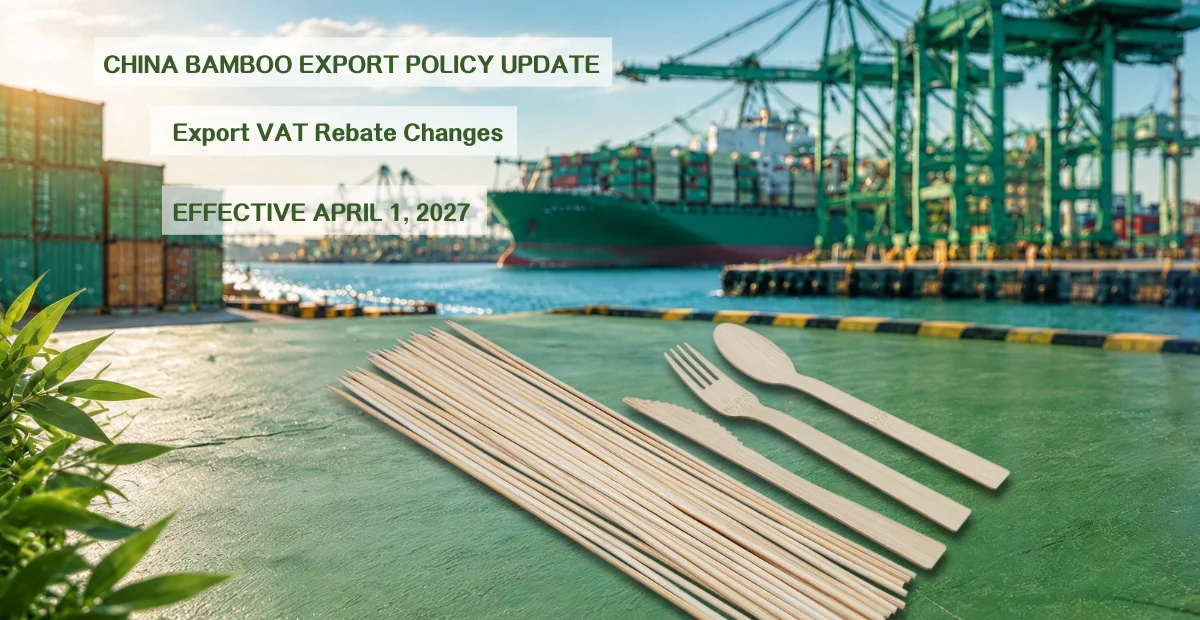
What changed: export VAT rebates end for the bamboo items listed in Appendix 2 of Announcement No. 29 of 2026, effective 1 April 2027.
What triggers the date: the export date shown on the customs declaration.
What is not affected: bamboo products outside the listed commodity codes keep their current treatment.
What buyers should do now: verify HS codes per item, review quotation validity and price-adjustment clauses, and fix the intended export date with the supplier.
Which Bamboo Products Are Covered?
The official list is written in commodity codes, not in product family names. Four groups of bamboo goods appear in the announcement:
- Certain bamboo materials and bamboo flooring products
- Specified bamboo plywood and construction materials
- Bamboo chopsticks and cutting boards
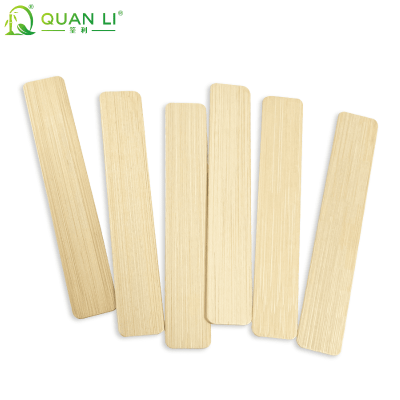
- Certain disposable bamboo sticks, rods, ice cream sticks, tongue depressors and similar products
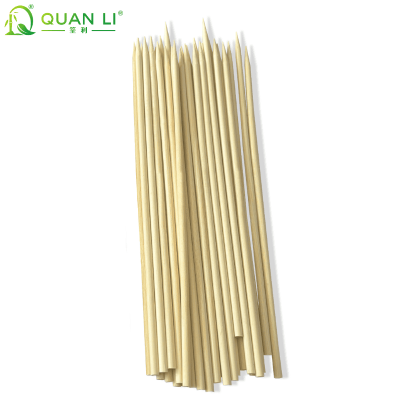
Commodity code 4421911090 is the clearest example: it covers specified bamboo round sticks, round rods, ice cream sticks, tongue depressors and similar disposable items. Products that sit close to that description — bamboo skewers, spoons, forks and plates — should be checked one by one instead of being assumed to share the same code.
| Product you buy | What to check | Why it matters |
|---|---|---|
| Bamboo skewers and food picks | Whether the item classifies as a round stick or a pointed stick in heading 4421 | A pointed skewer and a round ice cream stick can sit in different subheadings, with different treatment |
| Ice cream sticks and tongue depressors | Whether the goods fall under 4421911090 | This code is named explicitly in the announcement list |
| Bamboo chopsticks and cutting boards | The Chapter 44 heading and national subheading on the customs declaration | Listed as a separate product group, so a skewer code does not apply |
| Bamboo flooring, plywood and panels | Whether the item is one of the listed construction products | Board and material products form their own group in the list |
| Bamboo cutlery, straws and stirrers | Whether the exact code appears in Appendix 2 at all | Not every bamboo tableware code is listed, so blanket assumptions overstate the impact |
Table 1. Reading the announcement against the products you actually import. Confirm the final classification with a customs broker or tax adviser.
What the Change Means for Overseas Buyers
Removing an export rebate does not produce the same percentage increase on every product. Whether a quoted price moves, and by how much, depends on the supplier's tax treatment, cost structure, margin and the terms already agreed. Three areas deserve attention in the next two quarters.

1. Export quotations
Suppliers may re-quote when their tax treatment changes. Ask what the adjustment is based on, and avoid assuming a uniform increase across a mixed bamboo program — a container of skewers and a carton of tongue depressors are unlikely to move by the same amount.
2. Orders and contracts placed around the effective date
For shipments scheduled around or after 1 April 2027, review quotation validity, price-adjustment clauses and agreed delivery windows. An order signed before the effective date does not automatically keep the earlier rebate treatment: the export date on the customs declaration is what counts.
3. Production and shipping schedules
Because the applicable date follows the customs declaration, production, inspection, packing and booking have to be planned backwards from the date you want the goods exported. That conversation involves the supplier, the forwarder and, for consolidated cargo, the consolidator as well.
How Importers Should Prepare: Four Steps
Before confirming new orders, four checks cover most of the exposure.
Verify the HS code for each item
Check every product against the official list with a customs broker or tax adviser. A description on a supplier invoice is not a classification.
Review current quotations
Confirm how long a price is valid and what happens if the tax treatment changes inside that window. Put the answer in writing, not in a phone call.
Fix delivery schedules in writing
Allow enough time for production, inspection, document preparation and clearance, and state the intended export date on the purchase order.
Track official updates
Follow the Ministry of Finance and the State Taxation Administration for implementation details, and re-check the list before each shipment rather than once a year.
These steps do not remove the uncertainty a policy change creates, but they keep it inside a known range when budgets and delivery commitments are set.
Frequently Asked Questions
When will the policy take effect?
The cancellation of export VAT rebates for the products listed in Appendix 2 takes effect on 1 April 2027. The applicable date is decided by the export date shown on the customs declaration, not by the order date.
Will all bamboo products be affected?
No. Only products that fall under the commodity codes listed in the announcement are included. Other bamboo products should be assessed individually against their own code.
Will bamboo product prices automatically increase?
Not by a fixed percentage. Any price impact depends on the supplier's tax treatment, cost structure and the commercial terms already agreed, so a single blanket increase across a mixed program is unlikely.
What should buyers do first?
Confirm the HS code of every bamboo item you import, check the validity of current quotations and price-adjustment clauses, and agree the intended export date with the supplier in writing.
Does an order placed before April 2027 keep the old rebate?
Not automatically. Treatment follows the export date on the customs declaration, so an order signed in 2026 but exported after 1 April 2027 should be reviewed with the supplier and the customs broker.
Related Resources
The product pages and guides below cover classification, specification and supplier checks in more detail.
Planning Bamboo Purchases for 2027?
QL Bamboo manufactures bamboo skewers, sticks, cutlery and stirrers in Fujian, China, and ships to foodservice distributors and brands in more than 40 countries. If your program includes any code affected by the April 2027 change, we can confirm the product classification, current quotation validity and the export window for your order.
- Product specification and HS code confirmation per item
- Quotation valid until a stated date, with adjustment terms in writing
- Export scheduling agreed before production starts
Conclusion
China's export VAT rebate adjustment applies to selected bamboo-related products, not to the entire bamboo industry. For overseas buyers the priorities are narrow and practical: confirm the classification of each item, review pricing terms while there is still room to negotiate, and lock the export schedule well before April 2027. Accurate documents and early communication with the supplier remove most of the avoidable uncertainty.
Disclaimer: this article is general industry information and does not constitute tax, customs or legal advice. Confirm product classifications and applicable tax treatment with the relevant authorities or a qualified professional.