Where Does Bamboo Grow? A Quick Guide for Buyers
Ever wonder why some bamboo products feel higher quality than others? The secret is simple: location matters.
Just like wine or coffee, where bamboo grows affects its quality.
And when it comes to premium bamboo products, one country dominates: China.
Let's talk about why—and which regions produce the best bamboo.
The Big Picture: China Has 80% of the World's Best Bamboo
Global bamboo breakdown:
China: 500+ species, 15 million acres of forests
Rest of Asia: India, Japan, Southeast Asia
South America: Strong bamboo, but mainly for construction
Everywhere else: Small amounts, often introduced species
Bottom line for buyers:
If you want quality bamboo products (cutting boards, utensils, toothpicks), you're looking at Chinese bamboo. Specifically, Moso bamboo from southeastern China.Now let's zoom in on China's bamboo regions.
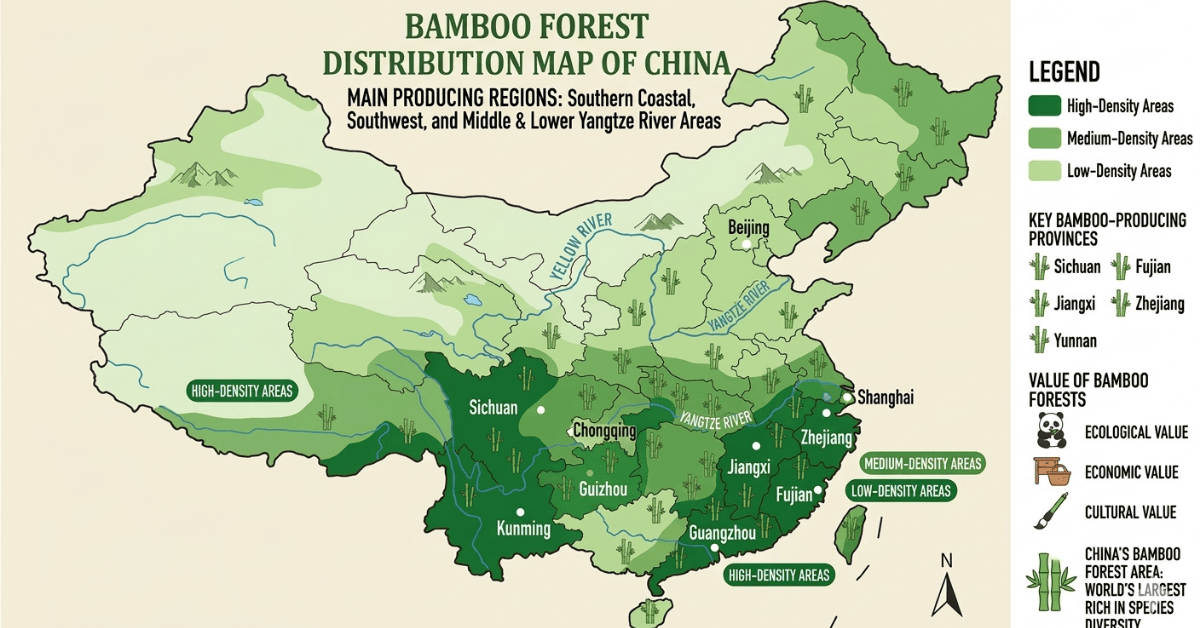
China's Bamboo Map: Where Quality Comes From
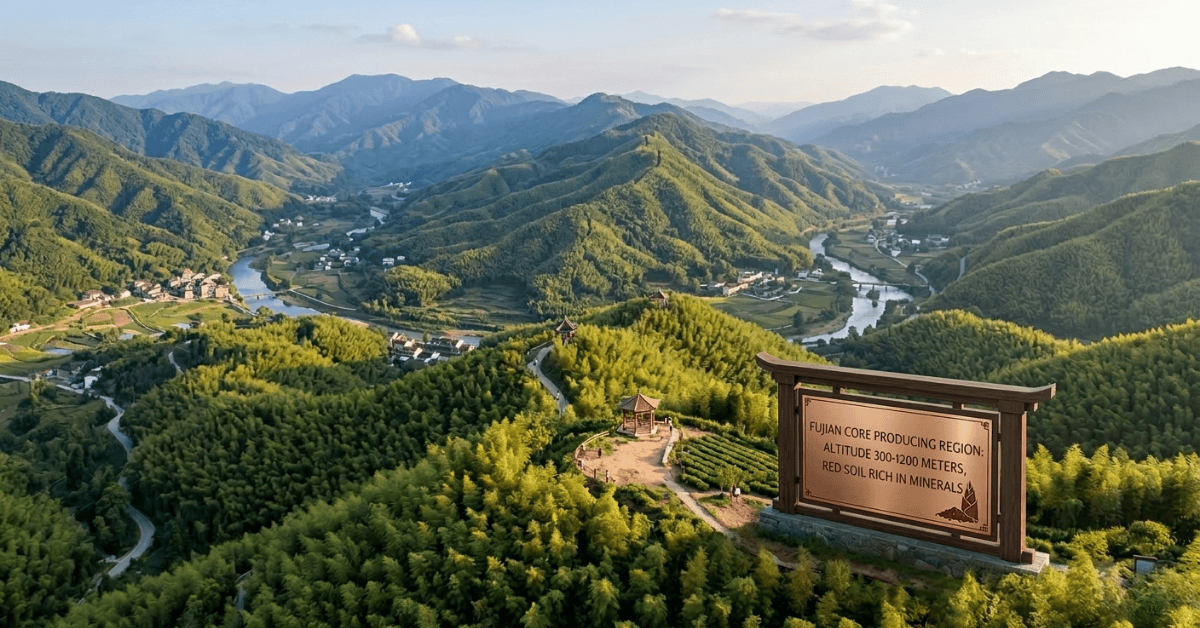
The Premium Zone: Fujian Province (Southeast Coast)
Here is why Fujian is the top bamboo region
Perfect climate:
1. Subtropical: warm, humid summers + mild winters
2. 1,400-1,800mm annual rainfall (ideal for Moso bamboo)
3. Average temperature: 17-20°C
Perfect geography:
1. Mountainous terrain with slopes (bamboo loves hills)
2. Elevation 300-1,200 meters (sweet spot)
3. Red soil rich in minerals
What grows here: High-quality Moso bamboo (Phyllostachys edulis)—the gold standard for:
1. Kitchen products (cutting boards, utensils)
2. Toothpicks and bamboo skewers
3. Flooring and furniture
4. Bamboo fiber products
Why buyers care:
Fujian bamboo has:
✅ Dense, strong fibers (longer-lasting products)
✅ Optimal moisture content (less cracking)
✅ Consistent quality (stable growing conditions)
✅ Natural pest resistance
Production scale: Over 3.7 million acres of bamboo forest in Fujian alone.
Industry advantage:
1. Generations of bamboo processing expertise
2. Established quality standards
3. Complete supply chain infrastructure
4. FSC-certified forests widely available
Zhejiang Province (East Coast, north of Fujian)
What's here:
1. 4+ million acres of bamboo (the largest bamboo area in China!)
2. Similar climate to Fujian
3. Famous for Anji County—the "Bamboo Capital of China"
What it's known for:
1. Moso bamboo forests (those gorgeous green hills you see in photos)
2. Bamboo flooring industry
3. Furniture and home products
4. Panda habitat (yes, the actual pandas)
Quality level: Excellent. Very similar to Fujian in climate and soil. Many top suppliers source from both Fujian and Zhejiang.
Jiangxi Province (Inland, west of Fujian/Zhejiang)
What's here:
1. 4+ million acres of bamboo (the largest bamboo area in China!)
2. Similar climate to Fujian
3. Famous for Anji County—the "Bamboo Capital of China"
What it's known for:
1. Moso bamboo forests (those gorgeous green hills you see in photos)
2. Bamboo flooring industry
3. Furniture and home products
4. Panda habitat (yes, the actual pandas)
Quality level: Excellent. Very similar to Fujian in climate and soil. Many top suppliers source from both Fujian and Zhejiang.
Other Chinese Bamboo Regions
Sichuan Province (Southwest):
1. Famous for: Giant panda habitat
2. Bamboo use: Mainly ecological (panda food) and local crafts
3. Commercial scale: Smaller than eastern provinces
Hunan Province (Central):
1. Significant bamboo forests
2. Growing manufacturing base
3. Quality comparable to Jiangxi
Guangdong & Guangxi (Deep South):
1. Climate: Tropical (warmer than Fujian)
2. Species: Mix of Moso and tropical bamboos
3. Use: More diverse species, some for construction
4. Note: Different characteristics than subtropical Moso
Yunnan Province (Far Southwest):
1. Diversity: 200+ bamboo species (biodiversity hotspot!)
2. Challenge: Remote, mountainous (harder logistics)
3. Use: Mainly local/regional, specialty species
The "Golden Triangle" Strategic Advantages (Fujian-Zhejiang-Jiangxi)
| Category | Key Factors | Strategic Benefit for Buyers |
| 1. Climate | Subtropical climate, consistent rainfall, and mild winters. | Reliable Material: Ideal conditions for Moso bamboo growth and stable year-round processing. |
| 2. Geography | Mountainous slopes with optimal elevation and proximity to ports. | Cost Efficiency: Natural drainage for healthy roots and easy export access through Xiamen or Ningbo. |
| 3. Infrastructure | Decades of industry development, specialized factories, and a skilled workforce. | Precision Quality: Advanced equipment and mature quality control systems ensure consistent batches. |
4. Sustainability | FSC-certified management, government oversight, and replanting programs. | Brand Compliance: Long-term forest health monitoring ensures your supply meets global green standards. |
What This Means When You're Buying
✅ Look for these quality indicators:
"Sourced from Fujian Province" or "Zhejiang Province" = Premium growing region
"Moso bamboo (Phyllostachys edulis)" = The right species for products
"FSC-certified from southeastern China" = Sustainable + quality region
Supplier owns/controls forests in these regions = Direct quality control
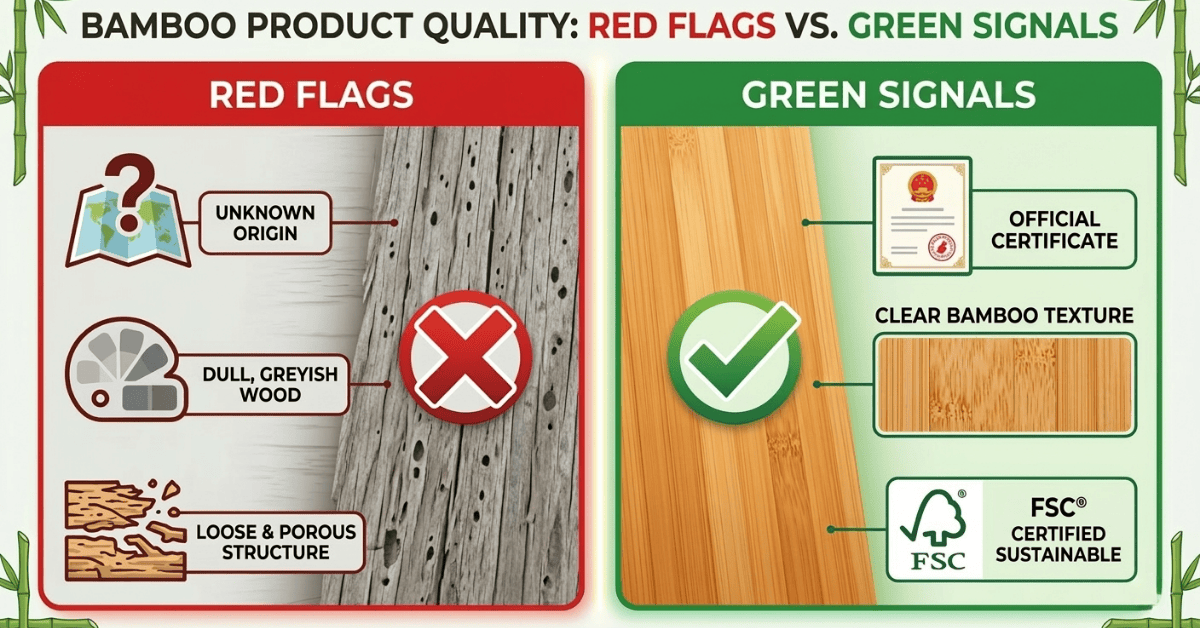
❌ Red flags:
Vague sourcing ("Made in China") = Which part of China? Big difference!
Suspiciously cheap = Possibly from marginal regions or inferior species
No specific bamboo species mentioned = Could be anything
No certification or unclear origin = Quality unknown
The QL Advantage: Fujian Forest Ownership
Here's where we walk the walk. QL owns 666 hectares of bamboo forest in Fujian Province.
Why this matters to you:
1. We control quality from day one
We choose which bamboo to harvest (age, density, season)
No middlemen, no mystery suppliers
Forest to factory in our hands
2. Fujian location = premium material
Ideal subtropical climate
Perfect mountain elevation
Rich soil
16+ years sustainable management
3. Consistency you can count on
Same forest = same quality, every batch
No supply chain surprises
Long-term availability secured
4. Full transparency
Know exactly where your bamboo comes from
GPS coordinates available
Factory tours welcome (see the forests yourself!)
5. Better value
No middlemen buying bamboo for us
Direct control = cost efficiency
Savings passed to you
Want to see the difference Fujian bamboo makes?
Contact QL for:
Sample products from our Fujian forests
Detailed sourcing documentation
Custom product development
Questions about bamboo sourcing? We're here to help—even if you're just researching.
Because when you understand where quality comes from, you make better decisions.